
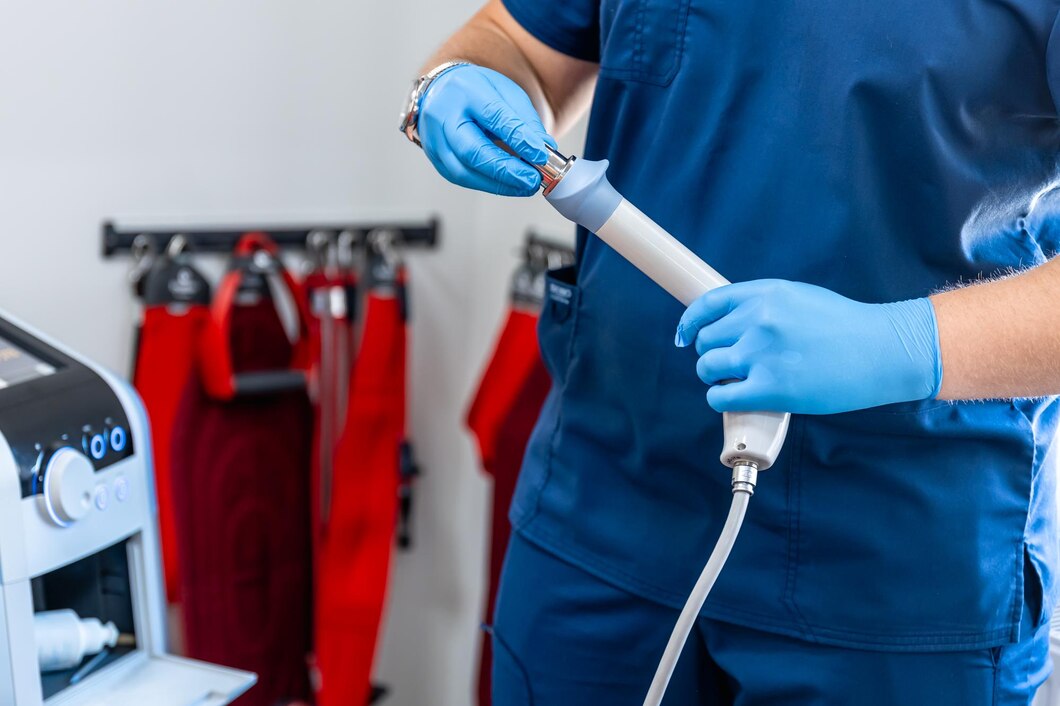
Colonoscopy is a well-established and essential procedure, but getting the colonoscope through the colon is not always straightforward.
One of the most persistent technical challenges is looping.
As the colonoscope advances, the shaft can form loops within the colon. This can make further advancement technically difficult and increase the physical effort required from the endoscopist.
For patients, the consequences can also include greater discomfort and the need for increased sedation.
A challenge that occurs frequently
Looping is not an occasional edge case. Core Scope’s clinical problem assessment identifies colonoscope loops as occurring in approximately 80% of colonoscopies.
The challenge can become even greater in patients with previous abdominal or pelvic surgery, where changes in anatomy may make navigation more difficult.
When a loop develops, the endoscopist may need to apply additional manoeuvres and torque to regain control and continue advancing the instrument.
The ergonomic cost
The challenge is not limited to the patient.
Colonoscopy requires repeated manipulation of a flexible instrument, and Core Scope’s research identifies excessive torquing as a major contributor to work-related injuries among endoscopists.
This creates a problem with both clinical workflow and operator ergonomics.
The longer it takes to manage difficult insertion and looping, the greater the physical and procedural burden can become.
Why solving looping matters
The impact of looping extends beyond the mechanics of inserting a colonoscope.
Healthcare systems are facing increasing demand for colonoscopy and growing waiting lists. At the same time, endoscopy services are working within existing staffing, infrastructure and capacity constraints.
A technology that can help manage looping and reduce procedure time therefore has the potential to address more than one problem.
It could support:
Patients through a potentially less difficult procedure.
Endoscopists through improved mechanical control.
Healthcare systems through more efficient use of existing capacity.
Core Scope’s approach
Core Scope is developing the Loop Straightener, a single-use adjunct designed to provide additional mechanical control when looping occurs and help reduce recurrent loop formation during advancement.
The device is designed around the existing colonoscopy workflow and is intended to be compatible with conventional colonoscopes.
The concept is deliberately straightforward: rather than replacing the colonoscope, add mechanical support where it is needed.
From device to platform
Loop management is only one part of Core Scope’s wider vision.
The company is developing a technology platform that combines the Loop Straightener with AI-enabled Colon Mapping and Path Finder technologies.
Together, these technologies address three connected challenges:
Looping → Navigation → Mucosal coverage
The objective is to make colonoscopy more controlled, more informed and more efficient.
Colonoscopy has advanced significantly through imaging, therapeutic instruments and AI-based detection. The next opportunity may be to improve the procedure itself — including how the colonoscope gets there, how it is navigated, and how much of the mucosa is actually seen.